Trust is the single greatest asset any business can have today. It’s rarer and more valuable than ever. Without the trust of people around them, businesses won’t survive.
Trust is human psychology. It’s our survival instincts. When our brain encounters anything new, it always asks “Is it safe? Can I trust it?” This is automatic. No human on Earth can switch this coding off. Therefore, no business can avoid these questions. To acquire and keep human customers, they must accept trust psychology. They must answer: “We’re safe, we’re trustworthy, and we’ll prove it.”
Trust Psychology
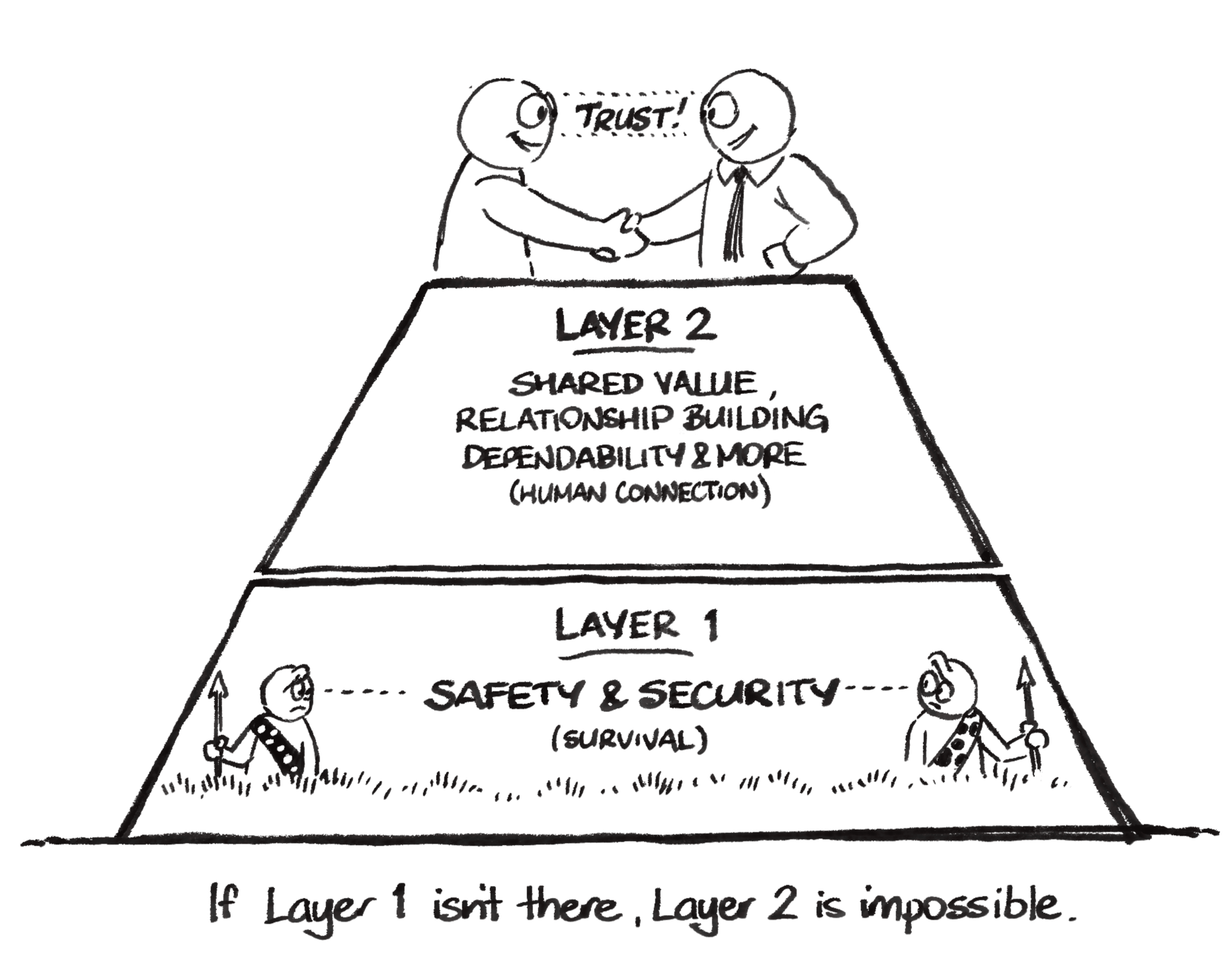
Trust is two layered. Layer 1 is primal: “is it safe?” Without a definitive “yes,” a human brain will not progress to Layer 2. Without safety, no message, offer or value prop matters.
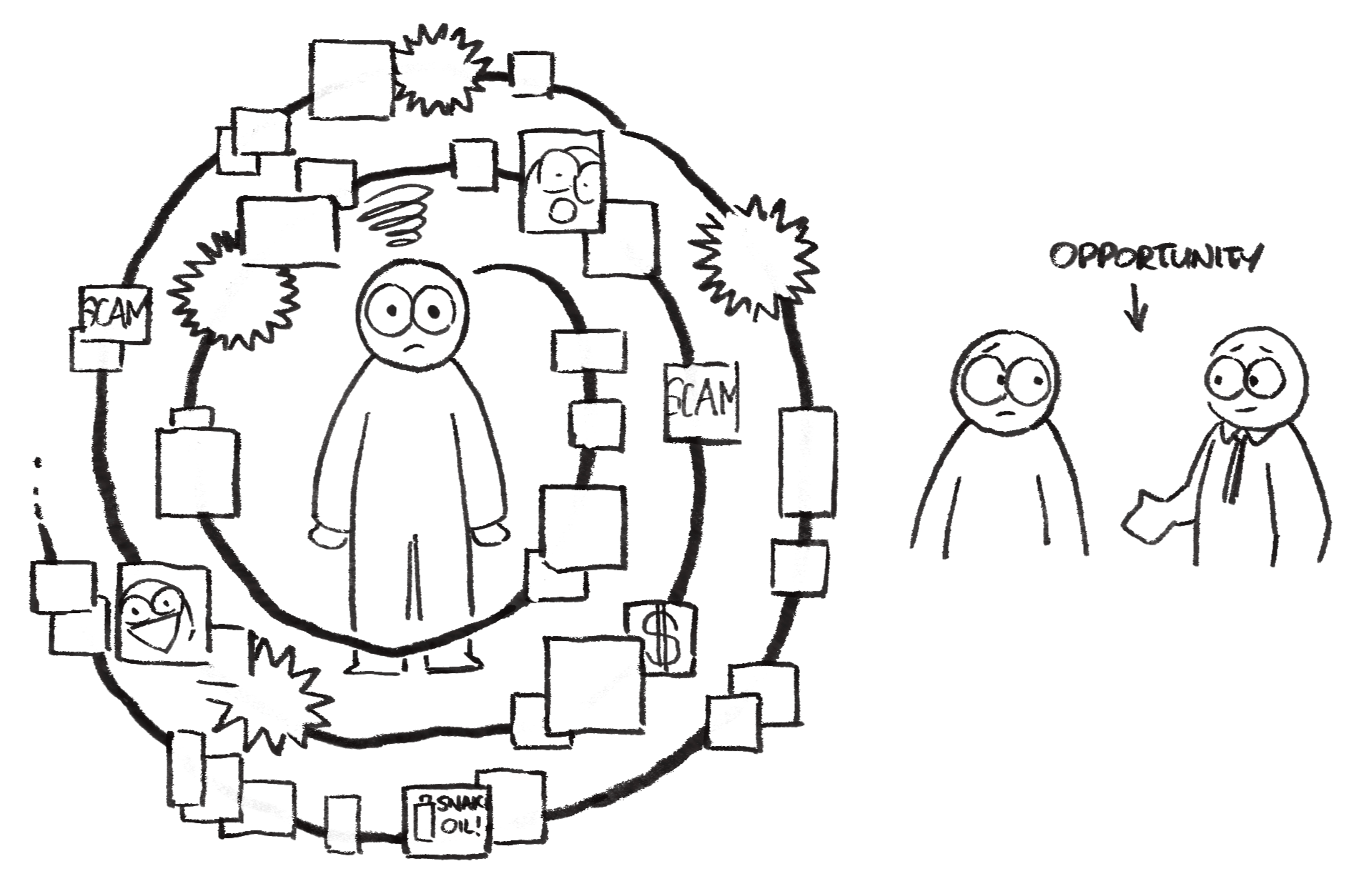
Modern technology has made it easier for businesses to reach more people faster. But with less time to connect and poor moderation against bad actors (e.g. scams), it’s made establishing safety much harder. This is the big business problem of our time, and it sucks for customers just as much.
Being wary and distrustful is tiring, isolating and less human. We are hardwired to trust others. It’s the foundation of our relationships, our social and mental wellbeing.
People want and need businesses to be safe and trustworthy. In uncertain times, trustworthy businesses aren’t just the ‘best’ choice, they’re the only choice.

“You don’t need big data or a psychology degree. Just listen to your own mind. How do you instinctively form trust? What red flags do you look for? Who do you trust now and why? What does your favourite café do so well?”
Callum Robertson, Hardwired (trust nerd)
-
If you’re reading this you’re probably worried. Be kind to yourself - no one in business expected the choices of big tech platforms to ignore user safety. In 2024 10% of Meta’s revenue came from scam content. I’m assuming your business is in the other 90%, but this has screwed you over because consumers are now trained to expect 1 in 10 ads on this platform will overtly rob them.
This is a safety conversation, not a value or efficiency conversation. The only way forward is to change, to find more reliable ways to help people see you as safe.
Does this mean no tech? Not necessarily. It means an end to end reassessment of the right tools for the right job - and that job is building trust.
Lastly, if you’re here, you care.
If this ingredient was missing, we couldn’t help you.
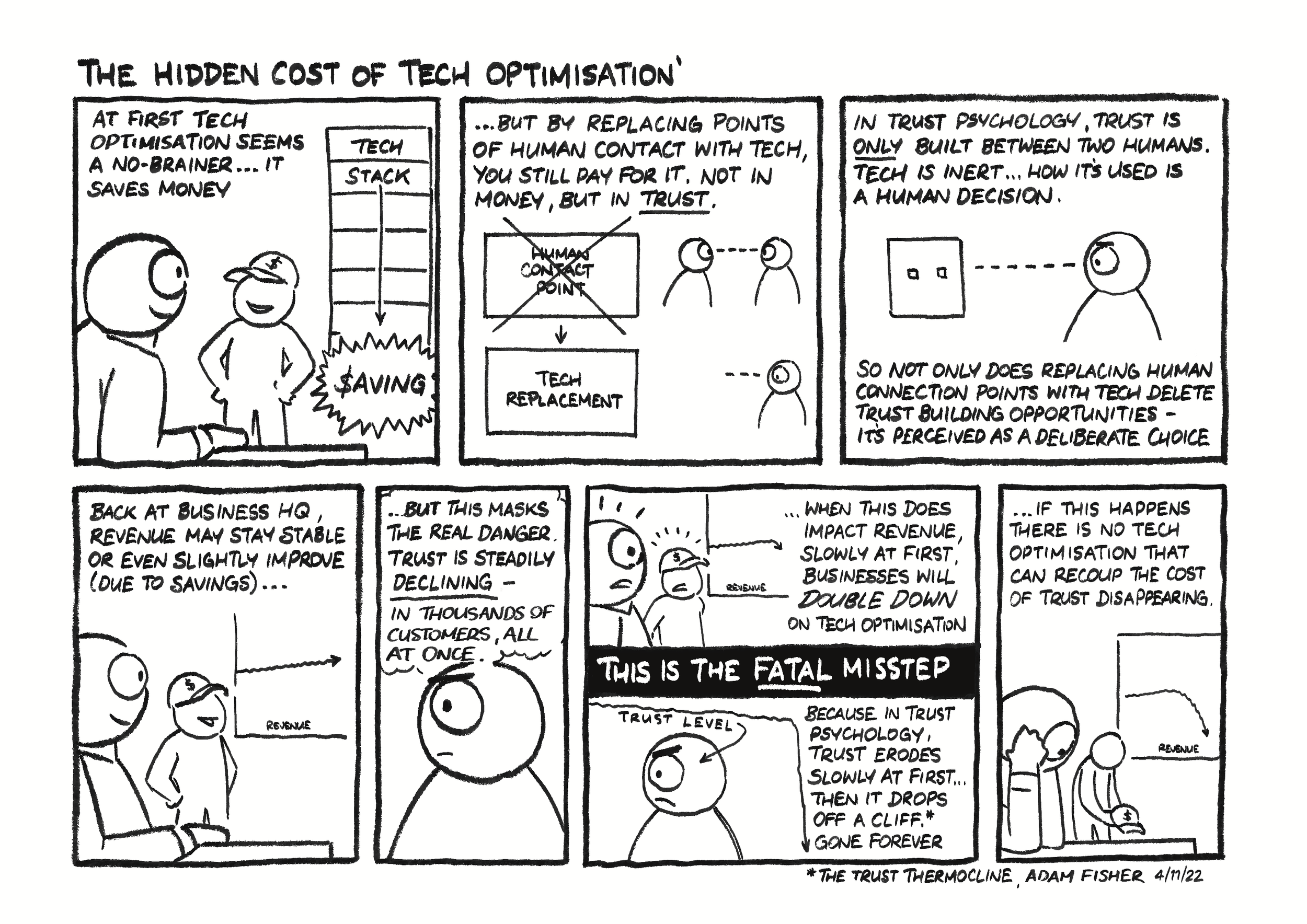
The mind bending truth of today is, despite the overwhelming complexity of technological and societal change, everybody - businesspeople, employees, customers - is still 100% human. Every decision being made today is a human decision, scrutinised and felt by other humans. AI, algorithms, robots and so on are tools. They are inert until a human chooses how to use them.
You are still in charge of your own destiny
Humans are only hardwired to trust you and your choices
AI doesn’t fire people, people fire people
Effort and care are human commodities, so is cost and corner cutting
Big tech platforms have only one function - making themselves revenue - and this is the human choice of their owners.